












 Over the last few years the Town Hall of Caravaca de la Cruz has been making a concerted effort to promote urban mural art as a way of not only beautifying certain corners of the old city but also reminding both locals and visitors of the cultural and historical heritage of the capital of north-western Murcia.
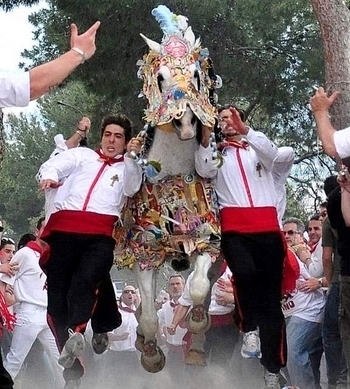
The result is a selection of impressive paintings which add to the attractions for visitors to Caravaca, making them aware of the importance of the city both in the past and in the present, and one of the latest examples to be unveiled is in the vicinity of the bus stop in Avenida de los Andenes. The image shows aspects related to the annual fiestas of the Moors, Christians and Wine Horses, which are held in early May, with some of the knights who heroically brought wine up to the besieged castle featured in a colourful design.
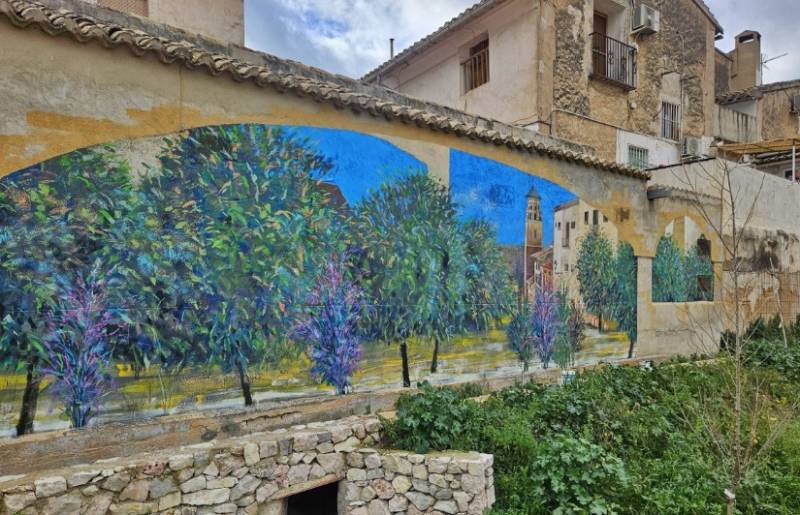 Another is a 45-metre-long mural in the recently created garden space of Huerto de los Vicarios, where Carlos Callizo has created a garden-themed design with the Caravaca landmark of the Torre de los Pastores in the church of La Concepción clearly visible on the skyline.
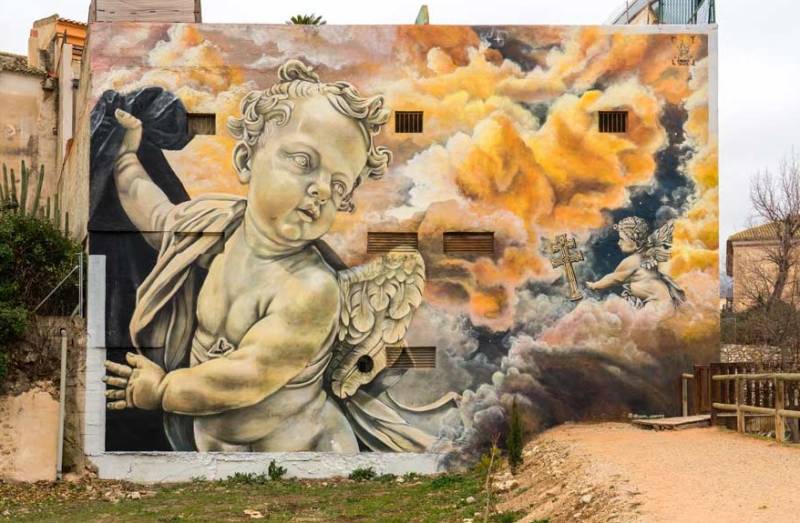
Perhaps the highlight is a work by internationally renowned artist Diego As, one of the most widely acclaimed in Spain and winner of the “Best Graffiti Art in Spain” award for his work dedicated to Julius Caesar in the Galicia city of Lugo. In Caravaca he has created an image which evokes the legend of the appearance of the True Cross in the city, and event which has led to it being declared a holy place of pilgrimage by the Catholic church and holding a 7-yearly-Jubilee that attracts visitors from all over the world.
The painting includes the iconic Caravaca cross, bought by many tourists as a keepsake but still an item of revered importance for the local population.
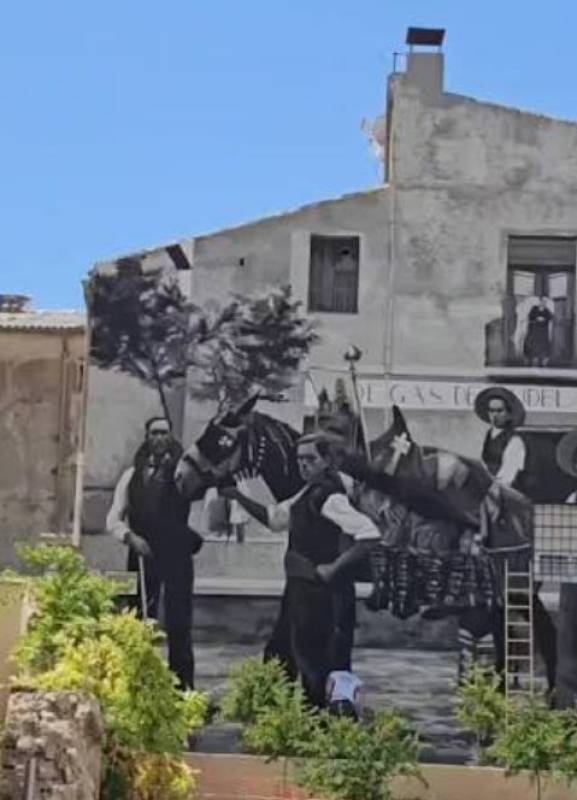
The following example is one which was unveiled earlier this year, in which an old photograph of the Wine Horses fiestas in the early 1940s, shortly after the Civil War in a time of great hardship throughout Spain, has been converted into a 902-square-metre painting by Martzel Do Nascimento, who has previously worked on important commissions in Madrid, Bilbao, Pamplona, Valladolid, Gipuzkoa and A Coruña. It shows one of the wine horses on its way to be blessed, accompanied by various runners dressed in the typical fiestas gear of the time and with the old Bodegas Tudela building in the background.
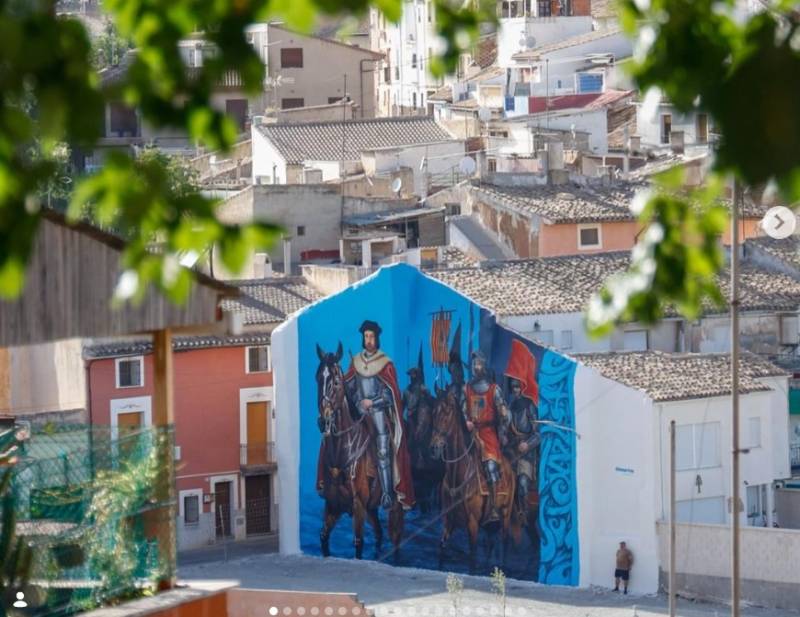
Finally, mention has to be made of the Cartagena-based artist Kraser, whose latest work is inspired by the visit of King Fernando “El Católico” to pay homage to the True Cross of Caravaca in 1488. This was a highly significant event for the city, cementing its prestige and importance as Spain prepared to expel the Moors, and the work of Kraser is full of symbolic imagery as well as the particular artistic traits of Kraser. It can be seen in the car park close to the Museo de la Fiesta.
For more local news, events and visiting information contact the local tourist office (telephone 968 702424) or go to the home page of Caravaca Today.
 More information about the places of interest which can be visited in the municipality of Caravaca de la Cruz, along with what's on and local news can be found in the Caravaca Today.
Caravaca de la Cruz, in the north-west of the Region of Murcia, is one of only 5 Holy Cities in the Roman Catholic world, a centre of pilgrimage, along with Rome, Jerusalem, Santiago de Compostela and Santo Toribio de Liebana, and is home to the Cross of Caravaca, the Vera Cruz.
The status of Holy City was bestowed by Pope John Paul II in 1998, granting the City a Permanent Jubilee year every 7 years for perpetuity, the first one held in 2003 and the next in 2024.
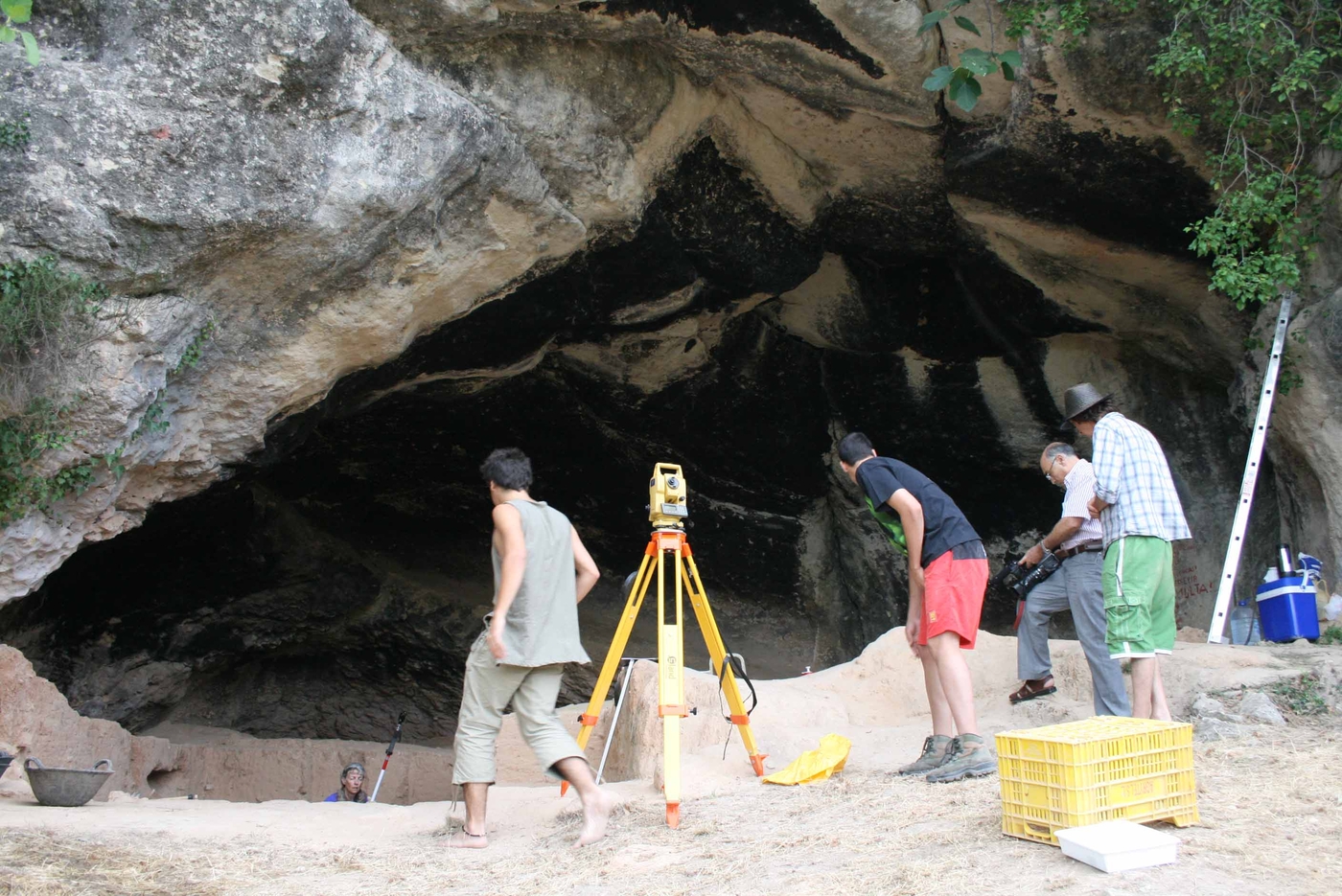
The strategic and natural advantages of Caravaca de la Cruz have attracted the attention of settlers for more than 800,000 years, the Cueva Negra yielding remains of Homo Heidelbergensis, forbears of the Neanderthals and the municipality also houses important archaeological remains from the Argaric, Iberian and Roman cultures. many of these can be seen in the Municipal Archaeological Museum.
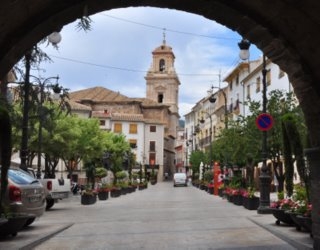
 As a border town caught between the Catholic forces of Castille and the last remaining Moorish stronghold in Spain, Granada, Caravaca had a turbulent medieval history, but it was during this period that the legend of the Cross of Caravaca was born, bringing the religious orders which shaped the structure of Caravaca today, with its impressive hilltop castle and eclectic collection of churches and monasteries, religious tourism today being a backbone of the town´s economy.
Caravaca de la Cruz is a municipality with important natural resources, including extensive forests, part of which have protected status due to their wealth of flora and fauna, and due to the abundant water supplies is also a major area for canned fruit production, apricots in particular being an important crop.
 Caravaca is renown for its important May Fiestas, held in honour of the Vera Cruz, which also incorporate the Moors and Christians celebrations and the Running of the Wine Horses.
Caravaca de la Cruz is also the home of Europe´s largest collection of ethnic instruments at Barranda, the Museo de Música Étnica Barranda and is the location of the Barranda festival de Cuadrillas, which celebrates the Region's ethnic music traditions.
The municipality is home to around 26,000 inhabitants and shares boundaries with Moratalla, Cehegín, Lorca, Puebla de Don Fadrique in the province of Granada and Vélez-Blanco in the province of Almería.
Tourist office opening times:
Weekdays: 10.00 to 14.00 and 16.30 to 19.30
Saturdays: 10.30 to 14.00 and 16.30 to 19.30
Sundays and public holidays: 10.30 to 14.00
Click for map, Caravaca de la Cruz Tourist Office