


















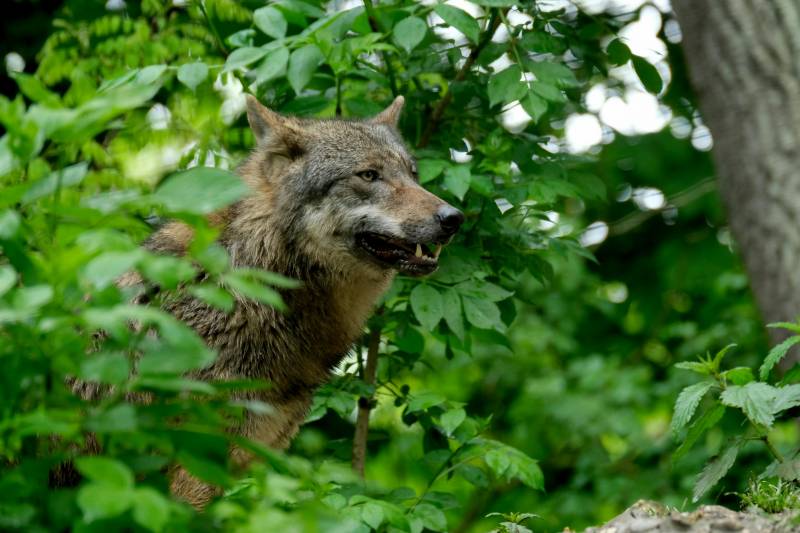
 The long-running debate over wolf protection in Spain has taken another turn, after years of political and legal wrangling at both European and national level. In 2024, the European Parliament voted to lower the wolf’s protection status despite opposition from Spain, reopening arguments about how the species should be managed.
Now, Spain’s Supreme Court has drawn a clear line.
In a ruling issued on February 12 and made public on Monday February 16, the Administrative Litigation Chamber of the Supreme Court stated that wolf hunting can only be authorised “when it constitutes the only solution to avoid damage to livestock.”
The judges stressed that any decision to kill wolves must be taken only after examining “alternative measures” that livestock farmers can “reasonably” adopt to prevent attacks. In other words, culling is a last resort, not a routine management tool.
The ruling confirms a previous decision by the High Court of Cantabria, which had annulled permits granted by the regional government for the “extraction” of several wolves suspected of causing damage to livestock.
Importantly, the Supreme Court underlined that all wolf populations in Spain were included in the List of Wild Species under Special Protection, known as LESRPE. This gave the species “the highest level of protection provided by our legislation”, particularly under the Law on Natural Heritage and Biodiversity.
Although autonomous communities do have the power to adopt management measures, including the killing of animals, the court made clear these actions “must be subject to rigorous conditions” and aligned with the criteria established by the Court of Justice of the European Union under the Habitats Directive.
The judges also warned that authorising the hunting of a specific number of wolves requires proper verification of the species’ conservation status. “It is not enough to observe that its population has increased in one or more specific municipalities,” the ruling states. Given the wolf’s wide-ranging territory, a “more extensive study” is required.
Above all, the court was unequivocal. The killing of wolves “must be selective” and “it is not possible to allow it to be applied indiscriminately.”
The decision comes less than a year after wolves were once again authorised to be hunted north of the Duero River, which runs across Castilla y León before flowing into Portugal, effectively dividing wolf management rules between northern and southern Spain, underlining that the issue of how to balance rural livelihoods with species conservation remains far from settled.
Image: Nicky P/Pexels
OR
Sign up for the Spanish News Today Editors Roundup Weekly Bulletin to get a comprehensive email with all the week’s news for Spain, Murcia, Alicante and Andalucía.
Get a sneak peek – here are a few of our recent Subscription Bulletins:
Discount Special Offer subscription:
36.95€ for 48 Editor’s Weekly News Roundup bulletins!
Please CLICK THE BUTTON to subscribe.