











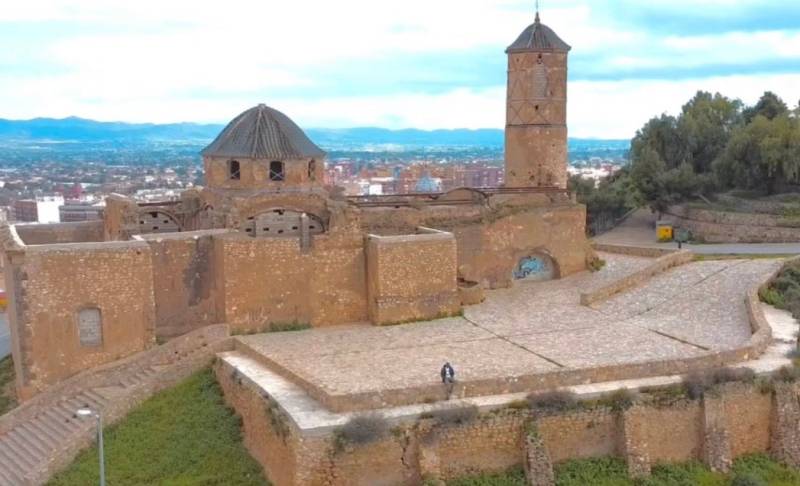
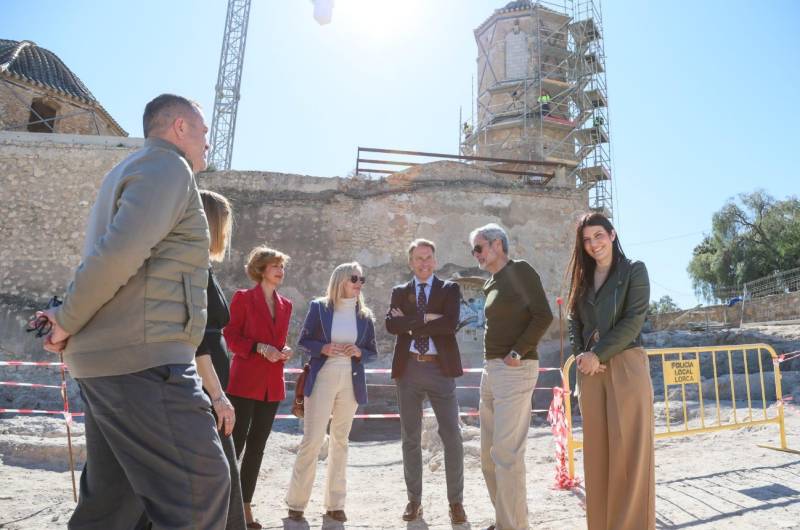
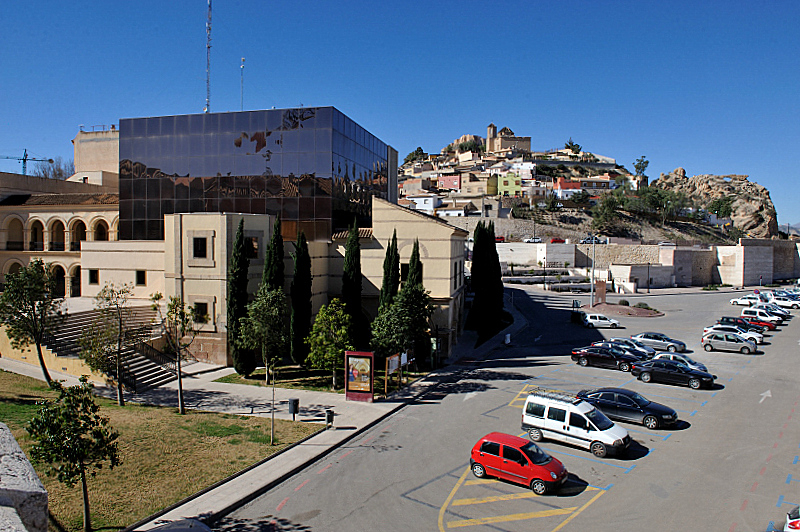
 Work continues in Lorca to restore and re-purpose the historic church of San Juan, which stands at one of the highest points in the current city on the lower slopes of the castle hill, in what Mayor Fulgencio Gil refers to as “paying off a historical debt” to the building, which was taken out of use for religious services in 1936, at the start of the Civil War.
The intention now is to convert the old church and make it a venue for social and cultural activities, and the investment is estimated to be 1.8 million euros. However, it is worth the financial effort, according to a Town Hall press release, as can be seen in the successful restoration of the old church of Santa María, which is now home to the CiuFRONT medieval museum, and a similar project at the church of San Pedro.
 The church of San Juan dates from as long ago as the 15th century although it underwent considerable rebuilding in the 17th, after another major earthquake hit Lorca in 1647. Only the cylindrical tower remains of the original structure, and in 1694 a baroque altar screen was added by Manuel Caro, with gold leaf added six years later.
In its early days it housed city council meetings and also served as a watchtower until the late 18th century, when the tower was adapted to house a bell.
Image: Imran Abbas Google Maps
For more local events, news and visiting information contact the tourist office at the Palacio de Guevara (telephone 968 441914) or go to the home page of Lorca Today.
The rich and extensive history of Lorca has left a legacy of archaeological sites and historic buildings around which the modern city has built its tourism industry. Amongst these are Lorca Castle, Plaza de España, the former Collegiate church of San Patricio, the municipal archaeological museum, the Casa Huerto Ruano, the Palacio de Guevara and the churches and convents of San Francisco, San Mateo, the Virgen de las Huertas, La Merced, El Carmen and many others.
Unfortunately, Lorca has been prone to natural disaster, suffering a severe flood in 1973 which killed 50 people, and a Gota Fría on September 28th 2012, as well as a series of earthquakes, the most recent of which was 5.3 on the Richter scale on 11th May 2011 and claimed 9 lives.
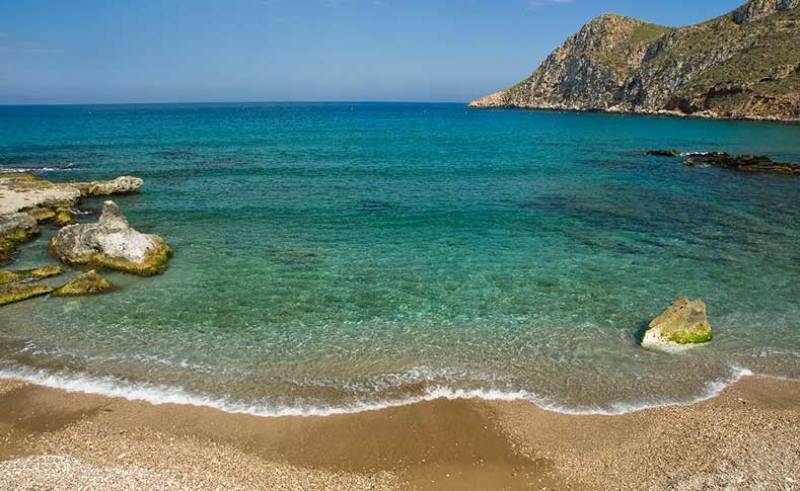
 Lorca also has an area of unspoilt coastline incorporating the Parque Regional de Cabo Cope - Puntas de Calnegre, which includes the beaches of Puntas de Calnegre, Cala Calnegre and various others. Although only one is accessible by road others can be reached along dirt tracks!
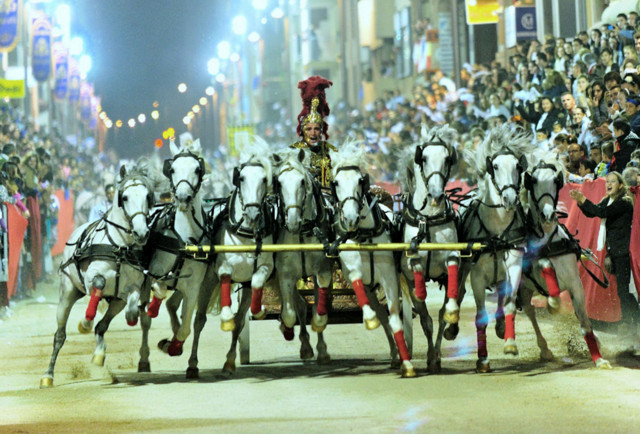
In terms of fiestas, Lorca is synonymous with Easter (Semana Santa), its biblical parades of International Tourist Interest status being famous throughout Spain. The week includes a series of parades in which the whites (Paso Blanco) and blues (Paso Azul) try to outdo each other with the magnificence of their embroideries and the skill and daring of their horsemen.
In the Autumn Lorca also celebrates the Fiestas of San Clemente and a Feria and there are a series of important events throughout the year in the Recinto Ferial, as well as a busy cultural and sporting programme.
The tourist office relocated for 14 years to Calle San Patricio, near the church, but has now returned to its former premises alongside the Palacio de Guevara in the Plaza Concha Sandoval, or Plaza de la Bordadora (click for map).
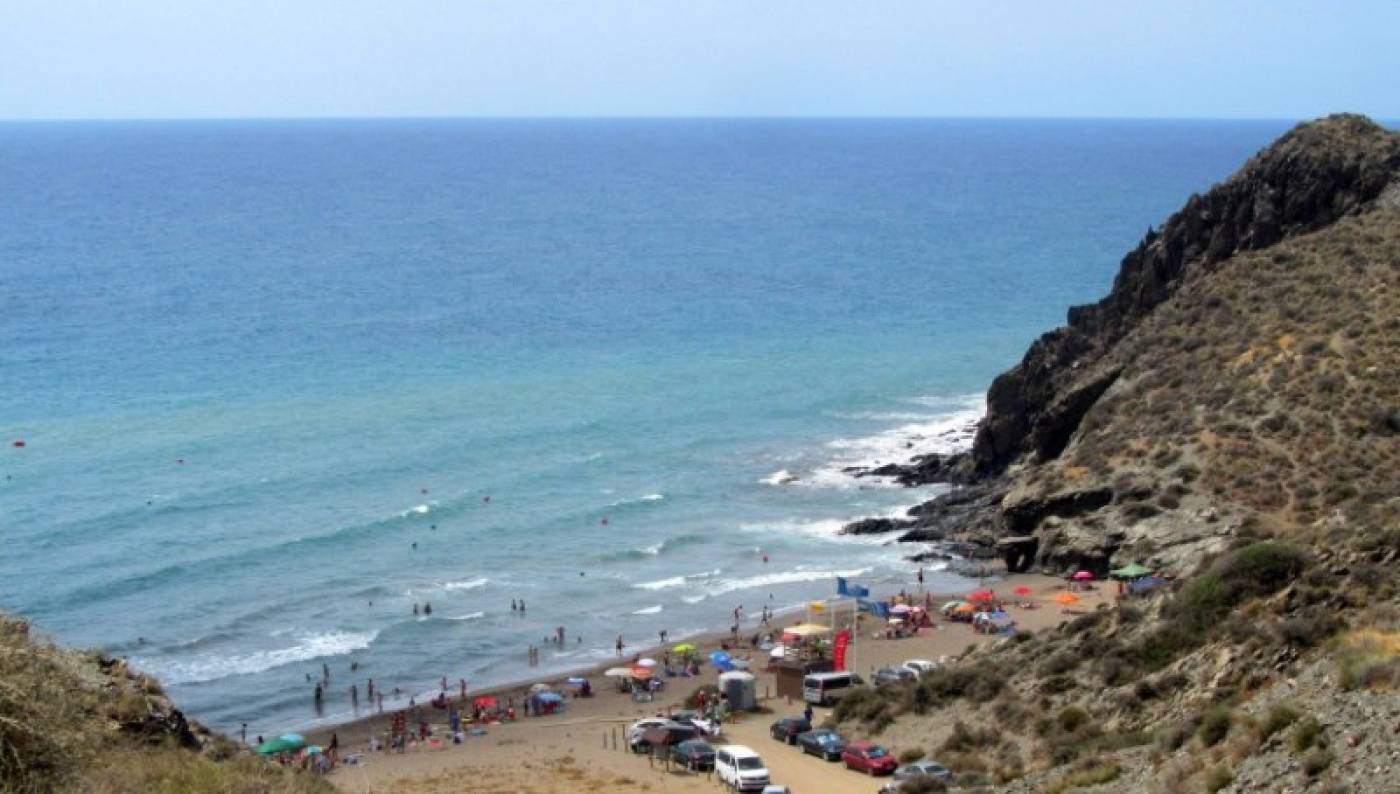 Lorca also has an area of inspoilt coastline incorporating the Parque Regional de Cabo Cope - Puntas de Calnegre, in the Sierra de Almenara, which includes the beaches of Puntas de Calnegre, Baño de las Mujeres, San Pedro, El Siscal, Cala Honda, Cuartel del Ciscar, Junquera, Cala de la Gruta, Cala Leña, Los Hierros, Cala Blanca and Playa Larga, although many are accessible only along difficult tracks or by boat!
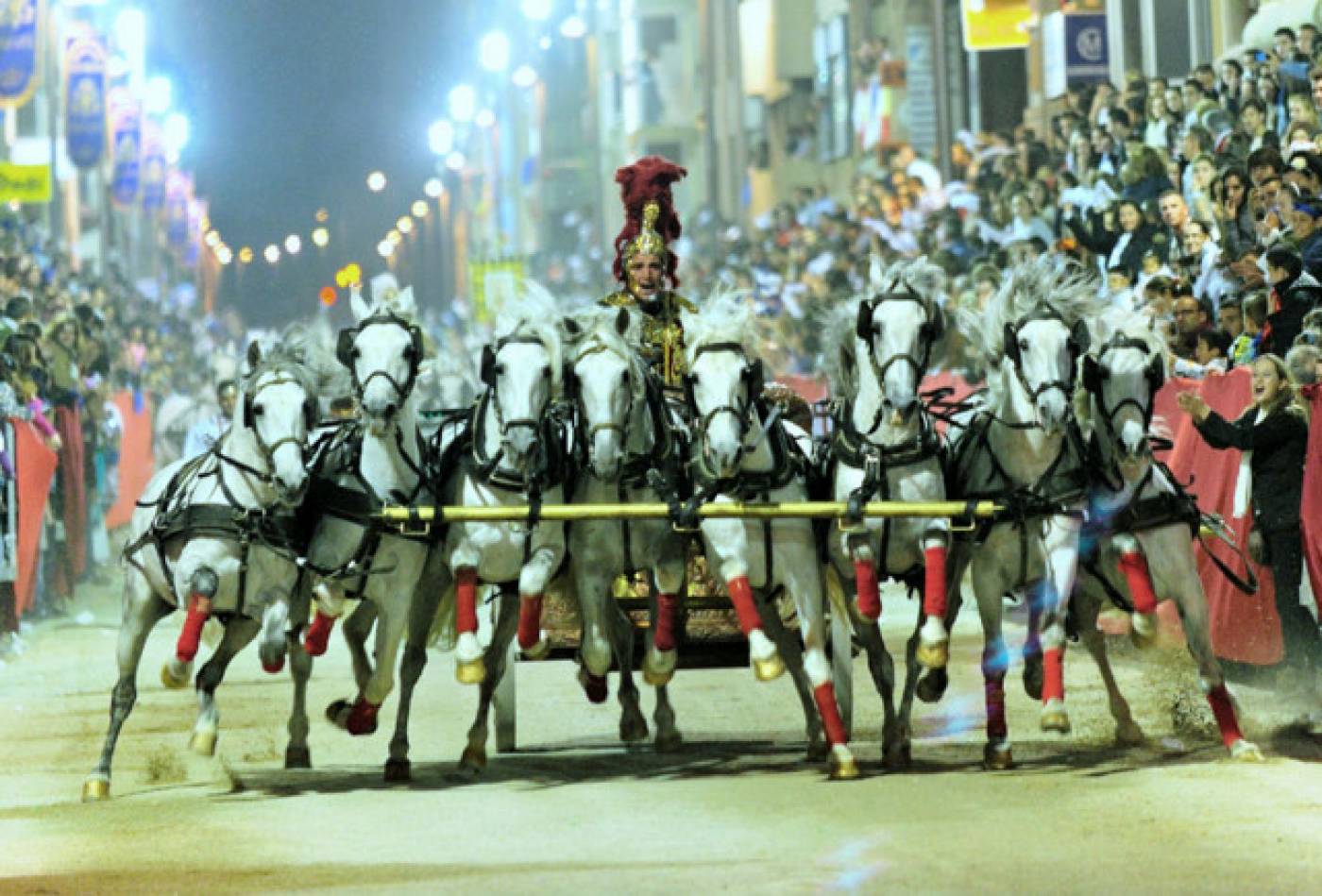 However, in spite of its many attractions, the name of Lorca is synonymous with Easter, (Semana Santa) its biblical parades of International Tourist Interest status and famous throughout Spain. The week includes a series of processions in which the Whites (Paso Blanco) and Blues (Paso Azúl) try to outdo each other with the magnificence of their embroideries and the skill and daring of their horsemen.
Lorca also has a Parador hotel, located within the historic castle.
Every day of the year apart from 1st and 6th January and 25th December, 10.00 to 14.00 and 16.30 to 18.30 (except Sunday afternoons).
These opening times are often extended and other information points created during the Semana Santa celebrations.
For more local news, events and visiting information go to the home page of Lorca Today