To be listed on the CAMPOSOL TODAY MAP please call +34 968 018 268.
article_detail
Date Published: 10/07/2026
One in four drivers in Murcia gets behind the wheel while taking medication that affects their driving
A new study reveals a largely invisible road safety risk, and the over-55s are the group most likely to be affected
Most drivers are well aware of the dangers of drink-driving or using a mobile phone at the wheel. But a new report suggests there's another risk that barely registers on people's radar, and it affects a significant proportion of drivers in Murcia every single day.
According to a study called "Drugs and Driving," presented this week by the Mapfre Foundation and the Bidafarma Foundation in collaboration with the DGT, 68% of regular drivers in Murcia take medication that could affect their driving. Of those, 27% admit to actually getting behind the wheel while on those drugs.
Nationally the figure is higher still, at 34%, meaning one in three drivers across Spain. The DGT estimates that between 5% and 10% of all road accidents may be linked to the effects of medication. The research itself was substantial, drawing on 2,000 interviews with drivers aged 18 to 75, alongside qualitative interviews with regular drivers and healthcare professionals.
What makes this particularly concerning is the gap between awareness and behaviour. In Murcia, 78% of regular drivers believe medications can pose a real risk while driving, yet only 34% say they take extra precautions when they're on them. And 97% of medicated drivers say they've been warned about the risks, but that information clearly isn't translating into greater caution on the road.
Dr Eva Arranz, a physician at the Mapfre Foundation, explains why. "Medications are associated with health improvements when prescribed by medical professionals, which can reduce the perceived risk of their impact on driving ability," she said. "Many drivers do not identify the risk or think they can compensate for the effects of medication while driving. This lack of awareness and this false sense of control is precisely one of the main problems revealed by this study."
The over-55s are the group most likely to be affected, accounting for 41% of those driving under the influence of medication, which is unsurprising given that older people tend to have more chronic conditions and take more drugs. Most are driving out of necessity rather than choice, with 73% using their vehicle for everyday essentials like going to work, shopping or visiting the doctor.
Which medications are most dangerous at the wheel?
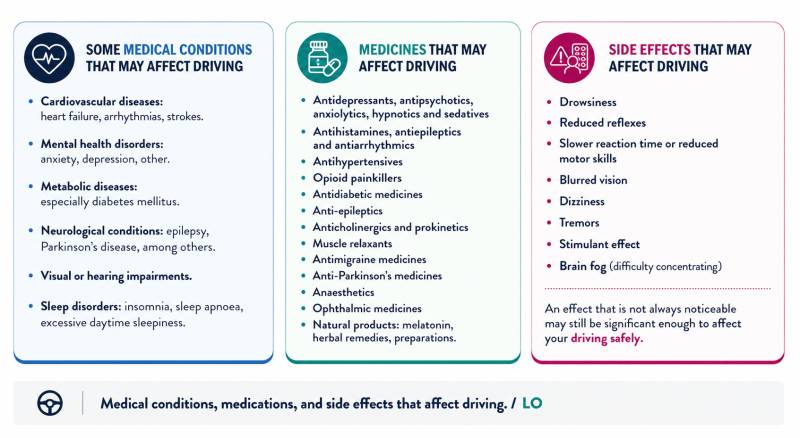
The study identifies several categories that carry the highest risk:
Antidepressants, antipsychotics and anxiolytics
Antihistamines and cold and flu remedies
Opioid painkillers
Antihypertensives
Antidiabetic drugs
Antiepileptics
Muscle relaxants
Drivers tend to be more alert to the risks of medications for sleep, anxiety or severe pain, but frequently underestimate the effects of commonly used drugs like cold remedies or certain natural products for relaxation. The study also flags the growing problem of polypharmacy, where people take multiple medications simultaneously, which can produce cumulative effects and unexpected drug interactions, particularly if alcohol is involved.
The most common side effects that put drivers at risk include:
Drowsiness and blurred vision
Slower reflexes and increased reaction times
Vertigo and tremors
Brain fog
Underlying conditions also matter. The study highlights that cardiovascular disease, neurological conditions, mental health disorders, sleep disorders and visual or auditory impairments all carry associated driving risks that drivers should be aware of.
Act before you start the engine
One of the study's key recommendations is that prevention needs to happen before treatment begins, not once someone is already driving. The most effective moments to get that message across are during medical consultations, cited by 69% of respondents, and when medication is dispensed at a pharmacy, cited by 49%.
A new campaign is being launched across community pharmacies, including those in Murcia, under the slogan "Medications and driving: a risk you don't see, but it exists," with guides, posters and counter displays designed to prompt a conversation at the point of sale.
As Manuel Villena, director of the Bidafarma Foundation, puts it: "The pharmacist not only dispenses medicines, but also accompanies, informs and educates on health."




















 Most drivers are well aware of the dangers of drink-driving or using a mobile phone at the wheel. But a new report suggests there's another risk that barely registers on people's radar, and it affects a significant proportion of drivers in Murcia every single day.