To be listed on the CAMPOSOL TODAY MAP please call +34 968 018 268.
article_detail
Date Published: 29/07/2026
Cartagena launches alert as Oriental hornet spotted near Roman Theatre
Beekeepers are working to trace a nest after the invasive species was found attacking bees near one of Cartagena’s best-known landmarks
Cartagena City Council is asking residents to keep an eye out for the invasive Oriental hornet (Vespa orientalis) after several were discovered near the city's Roman Theatre, raising concerns about the threat they pose to bees and other important pollinators.
The alert follows the discovery of the hornets during the removal of a beehive from a private property. A beekeeper carrying out the work spotted the insects attacking the bees, prompting the council to activate a new surveillance programme aimed at preventing the species from becoming established in the municipality.
As part of the response, beekeepers have set up a decoy using the original beehive to monitor the hornets' movements over the coming week. The hope is that tracking where they fly will lead experts to the nest before the insects have a chance to spread further.
The council is now appealing to the public to help by reporting any sightings. Residents can send details by email to controlplagas@ayto-cartagena.es, allowing the municipal pest control team to investigate reports and take action where needed.
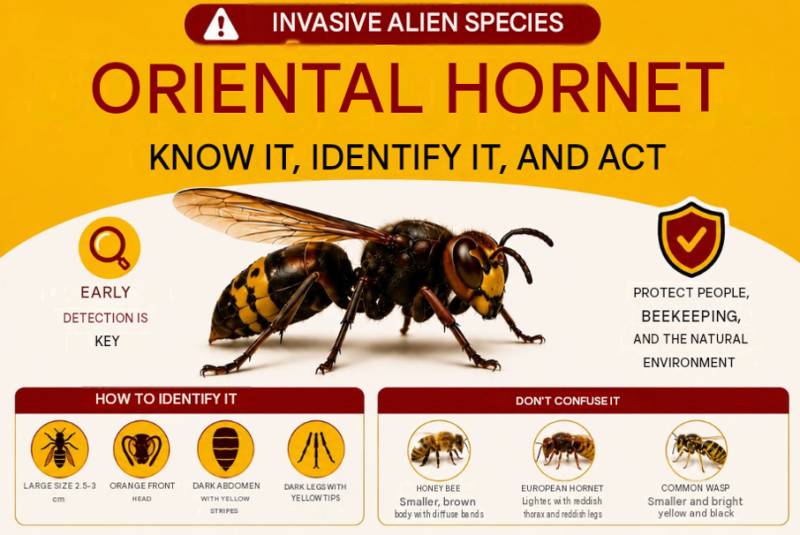
The Oriental hornet grows to between 25mm and 35mm in length and can be recognised by its reddish-brown body, a yellow patch on its face and two yellow bands across its abdomen. It's often mistaken for the native European hornet, although that species is generally larger, measuring up to 40mm, and has a much yellower abdomen.
Unlike many other hornets, the Oriental hornet usually builds its nests at ground level. They can often be found in burrows, underground cavities or tree hollows, with entrances that may be no bigger than a few centimetres across. Because they're so difficult to spot, the council is warning people not to investigate suspected nests themselves.
Officials also stressed that nobody should attempt to remove a nest or handle the insects. Their sting can be extremely painful and may trigger serious allergic reactions in some people.