









Everything you need to know about San Fermín, Spain's most thrilling and controversial festival, as 2026 gets under way
From its religious roots and Hemingway's legacy to a lightning-fast opening bull run and a tragic death on the first night
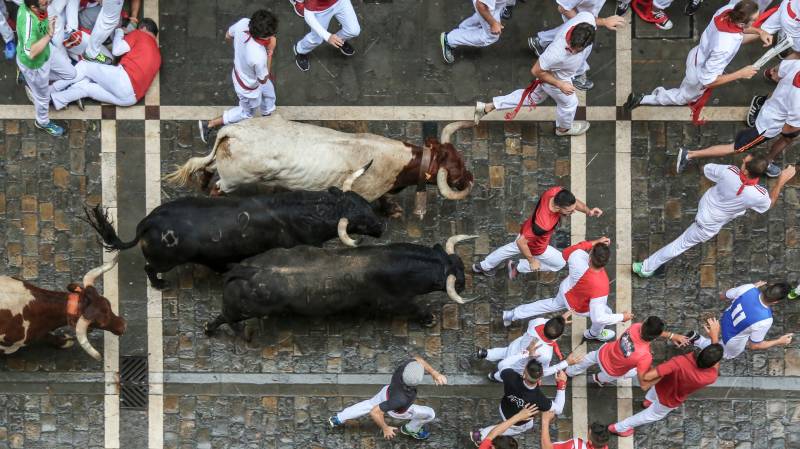 Every year on July 6, something remarkable happens in the northern Spanish city of Pamplona. A rocket fires into the sky, tens of thousands of people in white clothing and red scarves erupt in celebration, and eight days of non-stop festivity begin. San Fermín 2026 is now well and truly under way, and as always, it has wasted no time in generating both excitement and headlines.
A festival with deep roots
San Fermín is one of Spain's most storied celebrations, and its origins go back far further than most visitors realise. San Fermín himself is considered the first bishop of Pamplona, and the festival commemorates his martyrdom in the French city of Amiens. A relic of the saint was brought to Pamplona by Bishop Pedro de Artajona in 1186, and the connection between the city and its patron has endured ever since. Every July 7, his feast day, a solemn procession winds through the old town in his honour, and it's to San Fermín that runners direct their prayers each morning before the bulls are released.
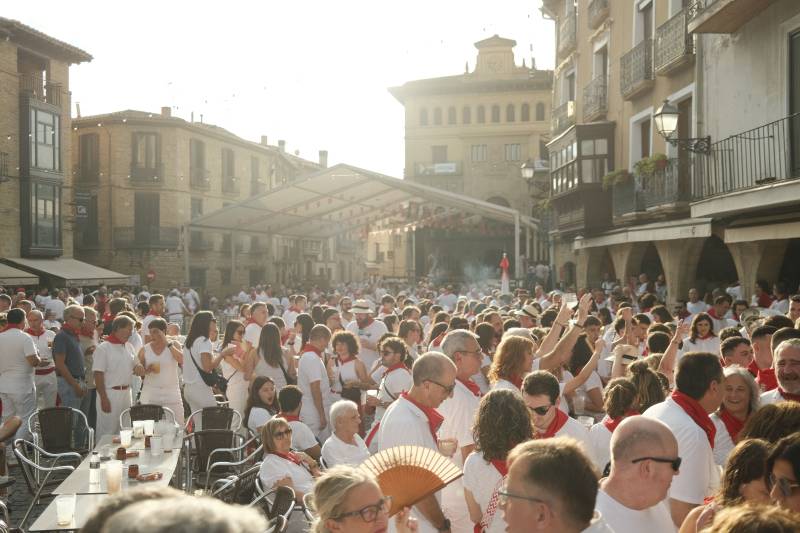 Even the famous red scarf has religious roots. According to the parish priest of San Lorenzo Church in Pamplona, Jesús Labari, the colour reflects the fact that priests wear red at ceremonies honouring a martyr. "In the case of the festival in honour of San Fermín, we do this because he was martyred," he has explained, "and the thing about the red scarf is a performance by the people of this religious custom." Tradition dictates the scarf stays around the neck for the duration of the festival, from the opening rocket until the final night.
More than just the bulls
It's easy to assume that San Fermín is simply about the bull runs, but that would be to miss most of what makes it special. Many locals who love the festival passionately never watch either the encierro (the bull run) or the bullfights. The real heart of San Fermín is the street, quite literally. Dancing, singing and socialising spill out of bars and into the open air across eight days, with the peña clubs and their brass bands providing much of the soundtrack as they parade through the old town.
Pamplona more than doubles its population during fiesta days, tripling at weekends, and the atmosphere that results is unlike almost anything else in Europe.
Ernest Hemingway played no small part in putting Pamplona on the international map. His novel "The Sun Also Rises" drew generations of foreign readers to the city, and many of the bars and locations he wrote about still exist and can be sought out today.
For those planning a visit, it's worth knowing that participation in the festival is genuinely open to everyone, with no need to run with the bulls to feel fully immersed. And if you do plan to run, check your travel insurance carefully first, as some policies explicitly exclude the bull run from their coverage.
The controversy that never goes away
San Fermín has never been short of critics, and the debate surrounding it has only intensified in recent years. Animal rights groups stage protests every year before the opening chupinazo firework, objecting to both the bull runs and the bullfights that follow, in which the same animals are later killed in the ring. Sixteen people have died during the runs since 1910, most recently in 2009, and dozens more are injured each year.
Bullfighting attendances across Spain have been falling sharply, with the number of fights dropping from 3,651 in 2007 to 1,425 in 2019, and the broader cultural debate about the practice shows no sign of quietening down.
The question of who should even be allowed to attend has also come under scrutiny, with proposals earlier this year around restricting children's access to bullfights sparking a fresh round of argument.
Women's safety has also been a persistent concern at the festival, particularly following a high-profile gang rape case at the 2016 edition that became a national scandal. Authorities have since increased police presence and surveillance significantly.
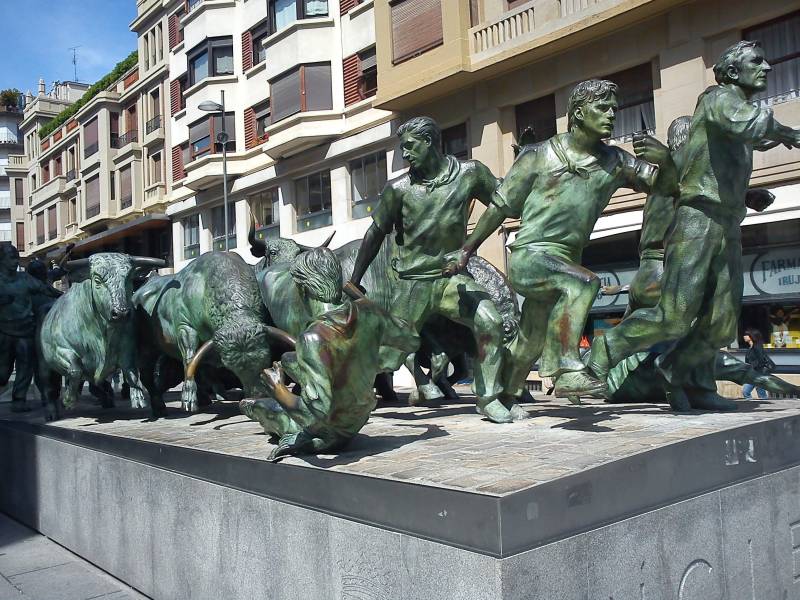 Yet for all the controversy, San Fermín continues to draw hundreds of thousands of visitors from around the world. The running of the bulls, an 875-metre course through the narrow streets of the old town covered each morning at 8am between July 7 and 14, remains one of the most viscerally exciting spectacles in sport, free to anyone over 18 who's willing to take the risk.
This year's opening run
Tuesday July 7 brought the first encierro of 2026, featuring the Fuente Ymbro bulls from Cádiz, making their 19th appearance in Pamplona. It was, by all accounts, a fast and relatively clean run. The six bulls, weighing between 559 and 610 kilograms, completed the course in two minutes and 16 seconds, around 20 seconds faster than last year's Fuente Ymbro run, staying tightly together and following the lead steers from start to finish without the herd breaking up. Four runners required medical attention for bruising, but crucially none suffered horn wounds, a reflection of what observers described as the exceptional temperament of these particular animals.
Among those injured was Lucas Cordero, 34, from Durango in the Basque Country, running for the fifth time. He left hospital on crutches with a sprained ankle, caught not by a bull but by another runner who accidentally stood on his foot. "I had taken my holidays to run in the encierro, I came alone, and now they've told me I need complete rest," he told reporters outside the University Hospital of Navarra.
An American and a Spanish runner were also taken to hospital, both with minor injuries.
Tragedy off the course
The opening night was also marked by a deeply sad moment. Shortly after 10.30pm on Monday, a 72-year-old man suffered a cardiac arrest inside a bar on Estafeta Street, one of the most celebrated thoroughfares of the entire festival. Despite the rapid response of emergency services, he could not be saved. The Municipal Police and Foral Police managed the scene as the surrounding crowds fell quiet in a moment of striking contrast to the festivities just outside.
The six Fuente Ymbro bulls, Fanfarrón, Manirroto, Escribiente, Botellero, Improvisado and Taranto, now rest in the bullring ahead of Tuesday afternoon's fights, where matadors Daniel Luque, Víctor Hernández and Aarón Palacio will face them.
Seven more runs still lie ahead before San Fermín 2026 draws to a close on July 14.
Image: San Fermin Pamplona and Mozzapics/Pexels


See more news about animals in Spain:
OR
Sign up for the Spanish News Today Editors Roundup Weekly Bulletin to get a comprehensive email with all the week’s news for Spain, Murcia, Alicante and Andalucía.
Get a sneak peek – here are a few of our recent Subscription Bulletins:
Discount Special Offer subscription:
36.95€ for 48 Editor’s Weekly News Roundup bulletins!
Please CLICK THE BUTTON to subscribe.